
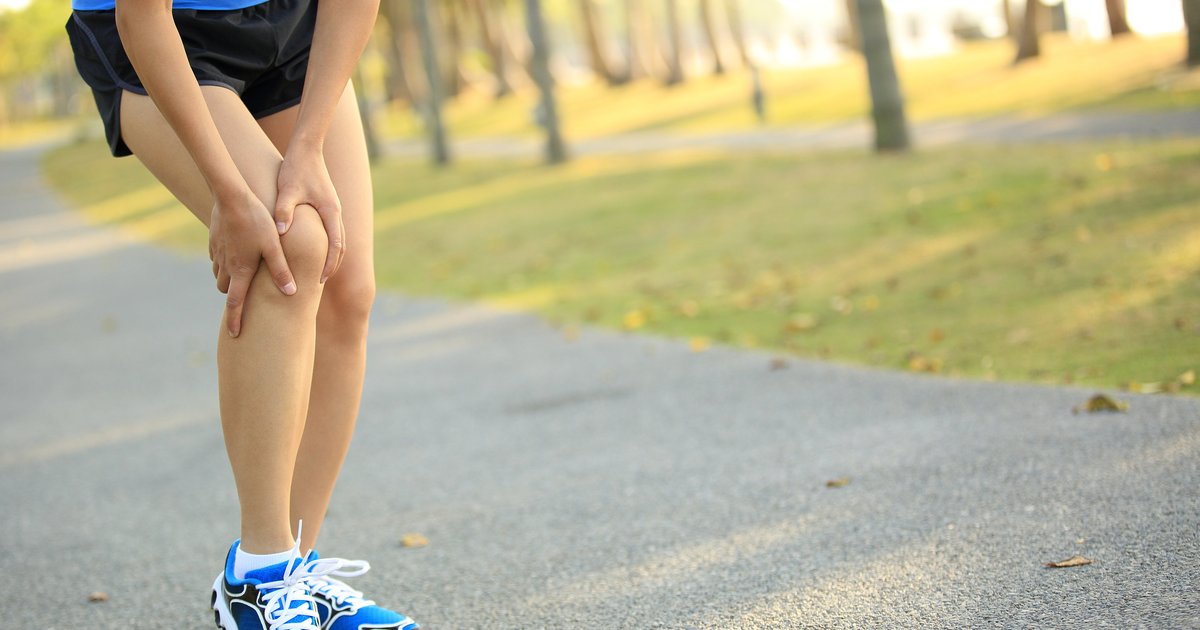
Knee pain is the second leading cause of chronic pain in the U.S., affecting more than 100 million Americans. It can stem from a single injury or from years of repetitive stress, and either way it chips away at how you move, work, and live. This post breaks down what actually causes knee pain, the symptoms and risk factors to watch for, what you can do at home, and when it's time to bring it to a professional.
The knee is one of the most complex joints in the body — a meeting point of bones, ligaments, tendons, and cartilage. When any of those structures get overloaded, the whole joint loses range of motion, stability, and strength.
Common causes of knee pain
- Ligament strains and sprains. The ACL, PCL, MCL, and LCL stabilize the knee and prevent excess motion. Push past their threshold in a fall, twist, or contact injury and they can strain or tear.
- Osteoarthritis (OA). The classic "wear and tear" diagnosis. Cartilage and other protective tissues break down over time, leading to a painful, bone-on-bone grinding — especially on stairs.
- Bursitis. The bursae are small fluid-filled sacs that cushion the joint. Repetitive stress and poor stability can inflame them, causing swelling and pain.
- Patellar tendonitis. Inflammation of the tendon connecting the kneecap to the shinbone. Common in athletes who jump a lot — basketball, volleyball, track.
- Fractures. A break or crack in the femur, tibia, fibula, or patella. Severity ranges from a small crack to a fully shattered bone.
- Gout. A form of inflammatory arthritis driven by high uric acid levels. Uric acid forms needle-like crystals in the joint, triggering sudden, severe pain, redness, and swelling. Diet plays a big role.
Symptoms to watch for
Location and severity vary depending on what's driving the pain. Common signs include:
- Swelling and stiffness
- Redness and warmth to the touch
- Weakness or instability
- Painful popping or crunching
- Inability to fully straighten or bend the knee
Knee pain by the numbers
A few statistics worth knowing:
- Over 100 million Americans live with chronic pain.
- Knee pain is the second most common form of chronic pain.
- About one-third of Americans report knee pain at some point in their lives.
- Roughly 15-20% of men report knee pain.
- Women report knee pain slightly more often, with overall prevalence around 20%.
Risk factors
A few things make knee problems more likely:
- Excess weight. Every extra pound adds load to the knee during walking and stair climbing, and accelerates cartilage breakdown.
- Lack of strength or flexibility. Strong, mobile muscles stabilize and protect the joint. Without them, you're more vulnerable to injury.
- Sports and occupations. Skiing, basketball, running, construction, and farming all put repetitive or high-impact stress on the knees.
- Previous injury. Once you've injured a knee, the surrounding muscles and ligaments are often weaker — making re-injury more likely.
What you can do at home
For a minor injury, the classic R.I.C.E. approach still works:
- Rest. Step back from the activities that aggravate the knee. A day or two may be enough for minor strains; bigger injuries need more.
- Ice. Ice reduces pain and swelling. A bag of frozen peas wraps the joint well. Don't ice for more than 20 minutes at a time.
- Heat. For chronic pain (not fresh injuries), heat brings blood flow into the area and supports healing. Avoid heat for the first 72 hours after an acute injury — it can increase swelling.
- Compression. A breathable, self-adhesive compression bandage limits fluid buildup and supports alignment. Snug, not tight enough to cut off circulation.
- Elevation. Prop the leg up on pillows to help fluid drain and reduce swelling.
Knee pain that won't quit? If self-care isn't getting you there, get a real answer. New patients at Advanced Health get a thorough exam and digital X-rays for $49, so we can pinpoint what's actually driving your knee pain. Book online at /schedule or call (312) 987-4878.
How we approach knee pain at Advanced Health
We start with a goal-oriented health history, then move into an orthopedic exam and a functional movement screen to figure out what's actually driving your pain.
Unless your knee pain came from direct trauma — a sports injury or a car accident — it's usually the product of repetitive stress and compensation patterns. The average American now sits more than nine hours a day. That kind of inactivity weakens the posterior chain and the stabilizers around the knee, and over time the joint and surrounding tissue break down.
That's why we evaluate above and below the knee, not just the knee itself. The hip, pelvis, and foot all influence how load travels through the joint. If there's acute trauma or a history of knee injury, we'll take digital X-rays to confirm conservative care is the right path.
Treatment is a blend, not a single tool
Most of our knee patients do best with three things working together:
- Chiropractic care to make sure the spine, pelvis, and knee are aligned so the joint can move and load properly. We use Chiropractic BioPhysics methods to address postural drivers when they're part of the picture.
- Soft tissue therapy to break down scar tissue, calm trigger points, and restore range of motion.
- Physical therapy to rebuild strength and stability in the muscles that protect the joint.
Combined, these give us the best shot at long-term results — not just a short-term reduction in pain.
Don't wait it out
The longer a knee issue goes untreated, the more you compensate around it. That compensation breaks down the joint further and turns what could have been a short course of care into a much longer one. If you've been dealing with knee pain and self-care hasn't moved the needle, let's get it evaluated and corrected — without drugs or surgery.
Book a new patient visit at /new-patients or call (312) 987-4878.
Have a similar concern?
The fastest way to get answers about your specific situation is a New Patient Exam.
Schedule your new patient exam