
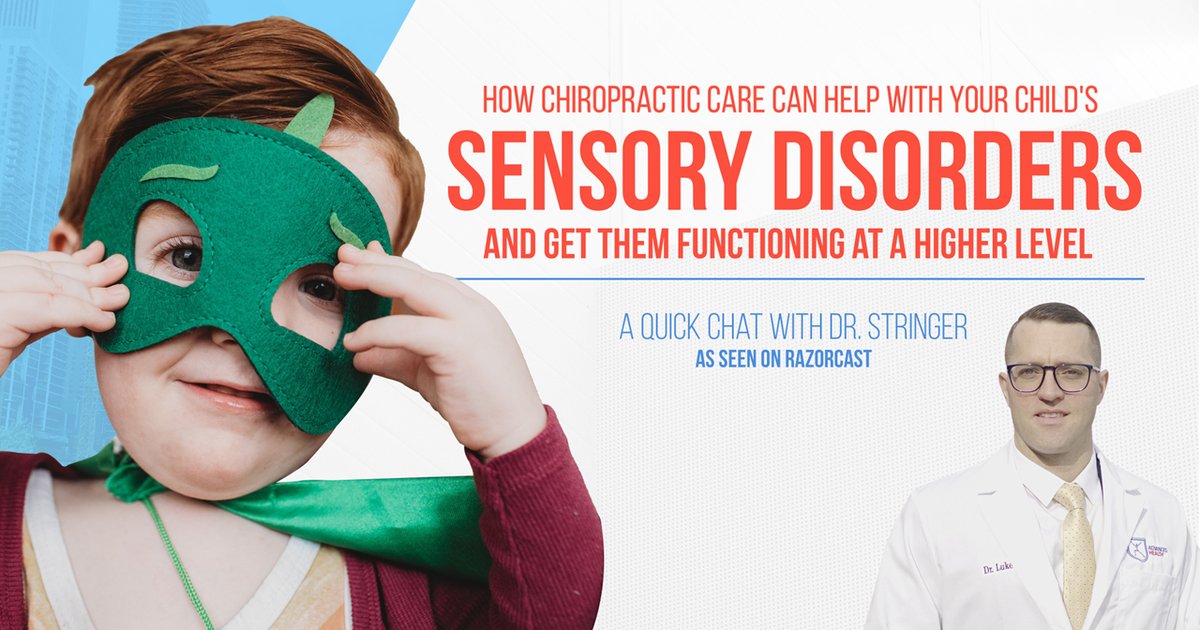
Children with sensory disorders — including autism, ADD, and ADHD — often respond well to chiropractic care that focuses on the upper neck. The goal is simple: take pressure off the nerves so the nervous system can regulate light, sound, focus, sleep, and mood more easily. Below, Dr. Luke Stringer explains what we look for, what changes parents notice, and when to bring a child in.
Why the upper cervical spine matters for sensory kids
The spine houses the nervous system, and the nervous system controls how the body feels and functions. When we work with kids who have sensory challenges, we look at what we call the three Ts: thoughts (stress from school and home), toxins (inflammatory foods, processed foods, color additives), and traumas.
Traumas can be a single big event — like a car accident — or repeated micro-stresses. For kids, it's usually the micro-stresses: hours on a tablet with the chin tucked to the chest, looking down. Over time, that posture creates subluxation — a joint (or several joints) in the spine shifting out of alignment and putting tension on the surrounding tissue and nerves.
We pay closest attention to the top two bones of the neck — C1 (the atlas) and C2 (the axis). The skull sits on the atlas, the atlas sits on the axis, and that's how the head rotates. Right behind those bones, the brain stem exits the skull and becomes the spinal cord. There is more nervous system activity in that region than anywhere else in the spine.
When C1 and C2 shift, they can put stress on the nerve roots right next to the brain stem. That tends to push a child into sympathetic tone — the fight-or-flight state — and keep them there. Stuck in sympathetic tone, a child has a much harder time settling, sleeping, focusing, and processing sensory input.
What changes when the upper neck moves better
We're not treating autism, ADD, or ADHD directly. We're restoring better motion, alignment, and muscle balance in the upper neck so the nervous system isn't under constant load. When that happens, the symptoms that show up because a child is dysregulated often start to ease.
Common patterns we see in the office:
- Sensitivity to light and sound becomes more tolerable
- Sleep deepens and becomes more consistent
- Appetite returns
- Focus and concentration improve
- Mood and social interaction get easier
We've had a young girl come in with chronic migraines and sound sensitivity so severe that her parents pulled her out of school. After a course of corrective care, her migraines stopped and she's back in class. We had a boy with poor concentration, dropping grades, and no appetite — he gave up his cello and was getting pulled out of class. After working on his posture, neck curve, and upper cervical subluxation, his appetite came back, his grades moved from a D to a B, and he picked the cello back up.
Every case is different, but the through-line is consistent: when the upper neck is working well, the nervous system has a much better chance to regulate.
Wondering if chiropractic care could help your child? We offer a $49 new patient exam and X-rays (when appropriate) so we can show you exactly what's going on in your child's spine before recommending anything. Book online at /schedule or call us at (312) 987-4878.
What age should a child see a chiropractor?
We have a saying in the practice: from cradle to grave. Both of my kids were adjusted within an hour of being born.
Birth is hard on a baby's neck. If there's any intervention — forceps, vacuum extraction, C-section — the doctor is pulling on the baby's head to get them through the pelvic inlet or out of the abdomen. That can create shifts and tension in the upper neck right out of the gate. In infants, those upper cervical issues often show up as:
- Trouble latching or rotating the head to the breast
- Reflux
- Colicky behavior, especially around feeding
Much of that maps to upper cervical and upper thoracic nerve function.
Adjusting a baby is not like adjusting an adult
A baby's bones are still mostly cartilage — soft and pliable. We don't thrust on babies. We palpate, find the shift, and apply pressure about as gentle as pressing on your own closed eyelid. The bone moves easily and comfortably. It looks almost like nothing is happening, and that's the point.
What to expect at your child's first visit
Whatever brings you in — a wellness check, a feeding issue, a sensory concern, a developmental delay — the first visit starts with a thorough consultation. We want to understand what's going on, how long it's been happening, how it's affecting your child day to day, and what you're hoping to change.
From there:
- Babies get a light palpatory exam along the spine and, depending on what brought them in, some specific neurological checks. We don't typically X-ray infants unless there's been a significant trauma or a neurological issue we need to rule out.
- Older kids get an orthopedic and spinal exam, posture screening, and X-rays when clinically appropriate so we can see the curve of the neck and identify any structural shifts.
If we find something we can help, we'll walk you through a care plan before anything else happens. A thorough evaluation always comes before treatment — that's standard, and it should be.
Ready to get your child evaluated?
If your child is struggling with sensory sensitivity, focus, sleep, mood, or any of the patterns described above, we'd be glad to take a look. You can book an appointment online, learn more about becoming a new patient, or call us at (312) 987-4878.
Have a similar concern?
The fastest way to get answers about your specific situation is a New Patient Exam.
Schedule your new patient exam